
India and the United States are committed to finalising an interim trade agreement, despite recent challenges including the US imposing a blanket 10 per cent surcharge and India's decision to wait for a new global tariff architecture. The US Trade Representative's annual report highlights India's maintained high import tariffs and various non-tariff barriers across several sectors.

Prime Minister Narendra Modi has begun a six-day tour of the UAE, the Netherlands, Sweden, Norway and Italy to strengthen bilateral relations amid geopolitical challenges. The trip will focus on energy security, trade, and technological cooperation.
The first phase of the proposed India-US bilateral trade agreement (BTA) is 'nearing closure' and would address the hefty 50 per cent tariffs imposed by the Trump administration on Indian goods, in addition to resolving America's market access issues, a government official said on Monday.

Chinese President Xi Jinping concluded his three-day visit to the US, stating that his discussions with President Donald Trump had injected "new substance" into the China-US relationship. Both leaders expressed optimism for future cooperation, with agreements reached on certain trade goods and discussions held on AI capabilities.

'It's very important for India to retain its sovereignty. India should not sign any agreement which compromises its sovereignty.'

The India-US ties witnessed a major downturn after President Trump slapped a whopping 50 per cent tariff on Indian goods, including a 25 per cent punitive levy over Russian oil purchases.


Prime Minister Narendra Modi's visit to New Zealand culminated in the elevation of bilateral ties to a strategic partnership, with a focus on doubling trade and enhancing cooperation in sports and the Indo-Pacific region. Modi and his counterpart Christopher Luxon attended a sports showcase, acknowledging a century of sporting ties and discussing future collaborations, including India's preparations for the Commonwealth Games 2030. The visit also saw 18 concrete outcomes and 10 agreements signed, alongside discussions with business leaders.
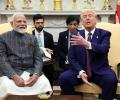
Deferment or rescheduling of the meeting assumes significance as the US has announced a staggering 50 per cent duty on Indian goods.
India does not do trade agreements in a hurry or with a "gun to our head", Commerce and Industry Minister Piyush Goyal said on Friday. He said India is actively negotiating trade pacts with countries and regions, including the European Union (EU) and the US.

Finance Minister Nirmala Sitharaman stated that India is likely to sustain economic growth of 7 per cent or more in 2026-27, continuing the pace recorded since the Covid-19 pandemic, despite geopolitical uncertainties and supply-chain disruptions.
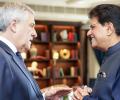
'I don't think we should ever negotiate with deadlines or hard stops because we tend to make mistakes then.'

The turning point came with the appointment of Sergio Gor as the US ambassador to India.
Prime Minister Narendra Modi concluded his three-nation tour in New Zealand, where he and his counterpart Christopher Luxon elevated bilateral ties to a strategic partnership. The visit focused on doubling trade by 2030 and expanding cooperation in the Indo-Pacific region, marking the first visit by an Indian PM in 40 years.
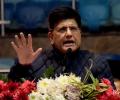
India and the US desire to give preferential market access to each other's businesses and teams of both the countries are working together on the proposed bilateral trade agreement, Commerce Minister Piyush Goyal has said. In February, US President Donald J Trump and Prime Minister of India Narendra Modi announced plans to negotiate the first tranche or phase of a mutually beneficial, multi-sector Bilateral Trade Agreement (BTA) by fall (September-October) of 2025.

During the 18th BRICS Summit in New Delhi, Chinese President Xi Jinping and Prime Minister Narendra Modi held a bilateral meeting, outlining a four-point approach for the steady and long-term development of China-India relations. The leaders stressed strategic understanding, win-win cooperation, mutual respect, and inclusive multilateral engagement, reaffirming their commitment to resolving the boundary question and addressing economic concerns. They also discussed global challenges and strengthening people-to-people ties.
'A deal will only be possible if India stops buying Russian oil -- but even then, New Delhi must not compromise its core red lines.'

In reflection of their growing congruence in areas of defence and security, the two sides, following the Modi-Mitsotakis talks, agreed to set up an institutional dialogue at the level of national security advisors, and boost defence industrial cooperation.
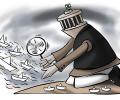
A team of US officials is expected to visit India in the coming weeks for the next round of discussions on the proposed interim trade agreement between the two countries, sources said. The visit gains importance as India and the US are likely to agree on an interim trade agreement before July 9, with New Delhi pushing for full exemption from the 26 per cent reciprocal tariff on domestic goods.

China announced a "ground-breaking" trilateral meeting between the presidents of China, the US, and Russia, scheduled for November 19 in Shenzhen during the APEC summit. This first-ever face-to-face meeting aims to discuss safeguarding world peace, strategic stability, and global challenges like nuclear arms reduction and artificial intelligence. Beijing has shown reluctance on trilateral nuclear arms control due to its smaller arsenal, while the war in Ukraine will not be a discussion point. The APEC summit will also see Japanese Prime Minister Sanae Takaichi's participation, drawing attention due to recent Sino-Japanese tensions over Taiwan.

India's exports experienced their steepest fall in five months, declining by 7.44 per cent in March to $38.92 billion, primarily due to trade uncertainty and geopolitical tensions, with shipments to West Asia contracting by over 50 per cent.
The Indian industry is paranoid about the USA's plan to impose reciprocal tariffs and wants early conclusion of a bilateral trade agreement, sources said on Wednesday. They said that the talks for the proposed bilateral trade agreement are going well.

The US Trade Representative's office removed a social media post featuring a map of India that showed the entire region of Jammu and Kashmir, including Pakistan-occupied Kashmir, as well as the Aksai Chin region as part of Indian territory.
David Perdue said in a post on X that the US-India relationship delivers real results through close cooperation in diverse areas, including defence, energy and through Quad engagement.

An Indian commerce ministry team has reached Washington for another round of talks from Monday on the proposed bilateral trade agreement (BTA), an official said. Chief negotiator of India and special secretary in the Department of Commerce, Rajesh Agrawal, will join the team on Wednesday.

US President Donald Trump lauded Prime Minister Narendra Modi's 'calm, cool, killer' persona at the G7 leaders' lunch in France, underscoring the deeply strategic relationship and formidable diplomatic skills of the Indian leader ahead of their crucial bilateral meeting.
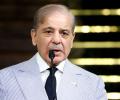
Pakistan's Prime Minister Shehbaz Sharif on Thursday thanked United States President Donald Trump for the 'historic' trade agreement reached between Islamabad and Washington, and expressed hope that it would expand cooperation between the two nations.

Prime Minister Narendra Modi on Tuesday announced the signing of the India-EU Free Trade Agreement (FTA), saying it accounts for 25 per cent of global GDP and one-third of global trade.
An Indian commerce ministry team will soon visit Washington for another round of talks on the proposed trade agreement with the US to iron out differences in sectors, like agriculture and automobiles, a government official said on Thursday.

New Delhi was told it had given something up; in reality it had stopped talking about it, notes Dr Abhishek Puri.
India's decision to reserve its rights to impose retaliatory duties on the US over imposition of tariffs on auto parts is a procedural move under the WTO agreement on safeguards and it will not affect ongoing negotiations on the proposed trade pact between the two countries, an official said. India on Friday proposed imposing retaliatory duties under the WTO (World Trade Organisation) norms against the US over American tariffs on imports of the country's auto parts in the name of safeguard measures.
Indian and US officials will begin deliberations on the proposed bilateral trade agreement in Washington from Wednesday with an aim to iron out issues and give an impetus to the negotiations.
India and the US will sit together in the next couple of weeks to decide on the nature of the proposed trade agreement and finalise its broad contours, a senior official said on Monday. During the recent visit of Prime Minister Narendra Modi to Washington, India and the US announced to more than double the two-way commerce to $500 billion by 2030 and negotiate the first tranche of a mutually beneficial, multi-sector bilateral trade agreement (BTA) by fall of 2025.

Prime Minister Narendra Modi will visit the UAE, the Netherlands, Sweden, Norway and Italy to deepen India's bilateral ties amid geopolitical changes.

Navigating this geopolitical minefield requires a cold-blooded blend of immediate tactical pleading, structural domestic diversification, and aggressive collective resistance, suggests Ambassador Rajasekhar.

External Affairs Minister S Jaishankar and US Secretary of State Marco Rubio discussed cooperation in trade, critical minerals, nuclear energy, and defence, reaffirming commitment to a free and open Indo-Pacific.

India and the European Union are set to announce on January 27 the conclusion of negotiations and finalisation of a free trade agreement, which is aimed at boosting economic ties between the two regions amid disruptions in global trade due to US tariffs, an official said.

Beijing published the world's first global framework for vocational standards. If India does not act swiftly, it will be compelled to certify its workers by someone else's rulebook, cautions Abhay Jere, ex-Vice Chairman, AICTE.

External Affairs Minister S Jaishankar stated that the stability of the Line of Actual Control (LAC) is essential for normalising India-China relations, asserting that border disturbances will have consequences. He connected trade and investment growth to border peace and highlighted significant economic issues, including a severe trade imbalance and lack of market access for India in China. Jaishankar also referenced the 2020 Galwan clashes as a critical turning point, underscoring the profound impact of border tranquillity on the overall bilateral relationship.
